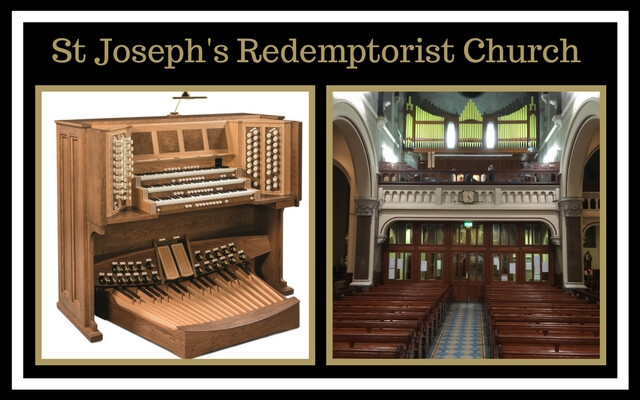
Choosing a digital organ
In December 2015, we were asked to bring an organ across the water to allow St Joseph’s Church to evaluate the merits of our ‘physical modelling’ solution for digital organ voices. The journey itself was quite a challenge, as we only had a few weeks’ notice. The organ and 22 speaker cabinets were beyond the capacity of one vehicle, so we had to ship speakers in advance and the organ itself travelled in a vehicle to Holyhead. A 6-hour ferry trip landed the instrument in Dublin before the break of dawn. From there, it was about a 90-minute drive to the church, where we arrived well before doors opened!
We were joined in the venture by our partner retailer Jeffers Music of Bandon, and with their help the temporary installation was set up by early afternoon. We also flew staff into Dublin and hired a car to join in with the work, so it was a full, hands-on – and dare I say it – well planned effort.
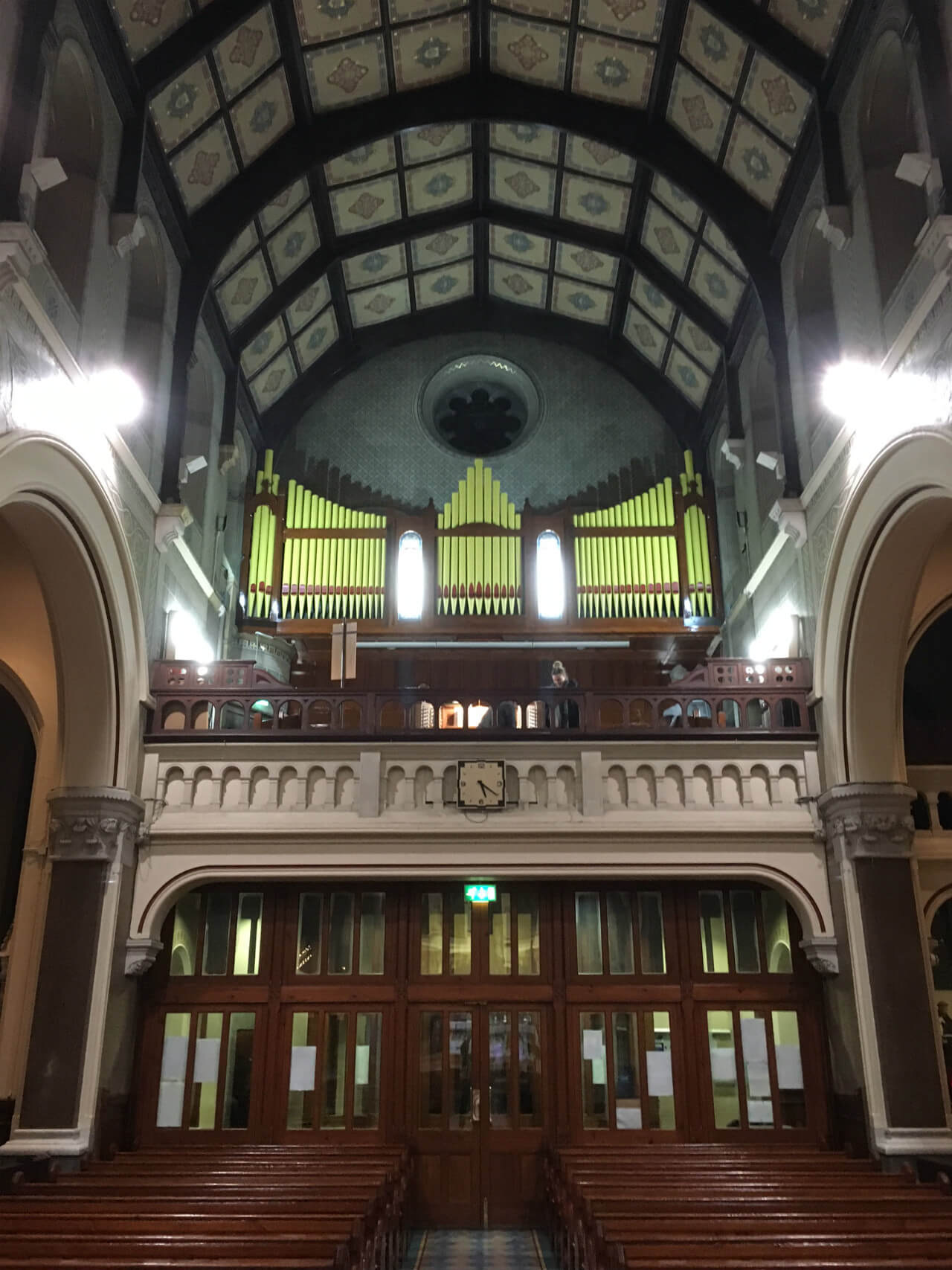
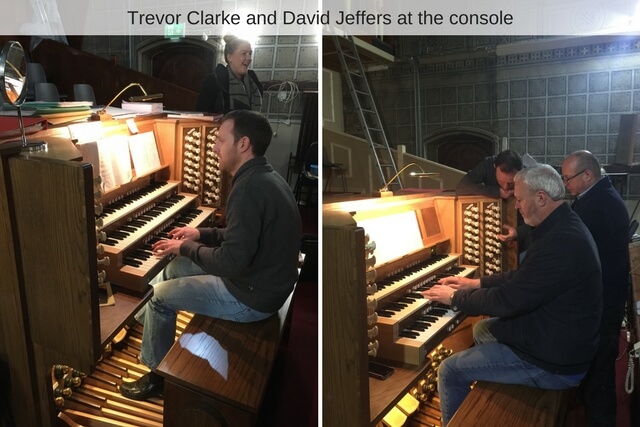
The console was set up near the chancel steps on the south side. Amplifiers were 40 metres away near the west end gallery, where the 22 speaker cabinets were set up. This would have been a challenge in itself, but our visit coincided with the hire of a leading competitor’s digital instrument for the television broadcast of the Christmas Night and Christmas Day Masses. While this made the working space more than a little congested, it did allow direct comparison of the two contending instruments for this potential order.
I am not sure what your experience of judging sound quality is like, but I think most people will agree that it is very difficult indeed to carry accurate aural memory. So, having the two instruments in the building together was a great benefit to the customer, and a rare opportunity for us as well to hear our instrument side by side with another leading brand. You will imagine our great pleasure when we learnt that the church had decided to use our instrument for the broadcast service, and not the one hired in for the job. At this point we were fairly confident we had a good chance of getting the order, but of course at this stage no information on pricing had been supplied.
Configuring and Installing the Regent Classic Organ
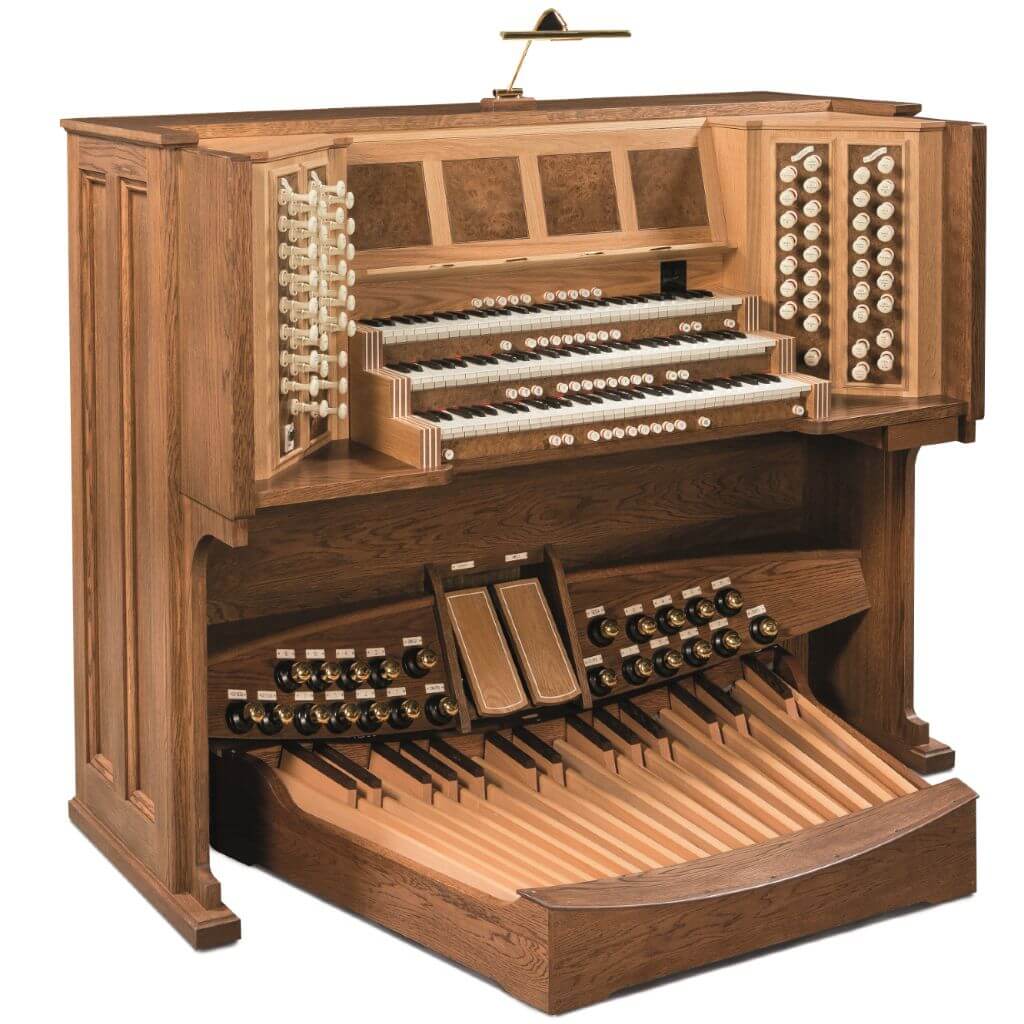
In March of 2016, we had confirmation that we were selected, and so the more detailed discussion on design got underway. Organist Trevor Clarke was immensely involved with this. Of crucial importance was the height of the console, as he also directs the choir and needed a good line of sight to conduct the choir while standing directly behind the console on the rearranged gallery. This height restriction limited the number of stops we could fit in the classic ‘English’ twin column jamb layout, and we could not get quite enough to meet the desired specification.
We got over this by eliminating a roll-top from the design, and used the height this would normally add to slightly raise the jamb height. This allowed an extra 4 stops to be fitted. Losing the roll-top was not an issue as the console is on the locked gallery, and so the console is far away from the meddling fingers of any visitor.
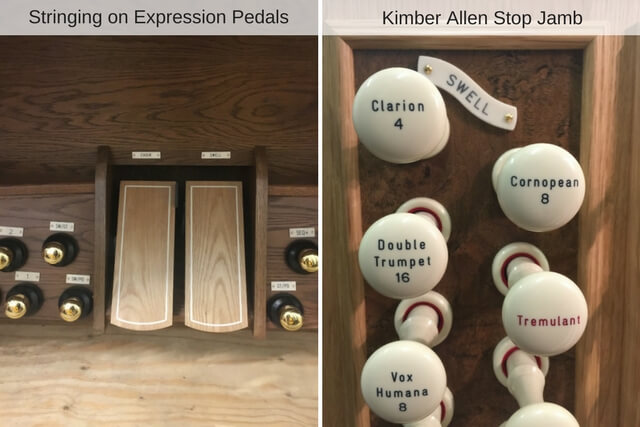
We also spent a lot of time preparing colour rendered visuals of the console, to help Trevor decide on the selection of veneers and choice of drawknob. From the start Trevor knew he wanted to use Kimber Allen stop knobs, and solenoids that allowed a ferrule to provide a contrasting white ring where the solenoid shaft passes through the jamb.
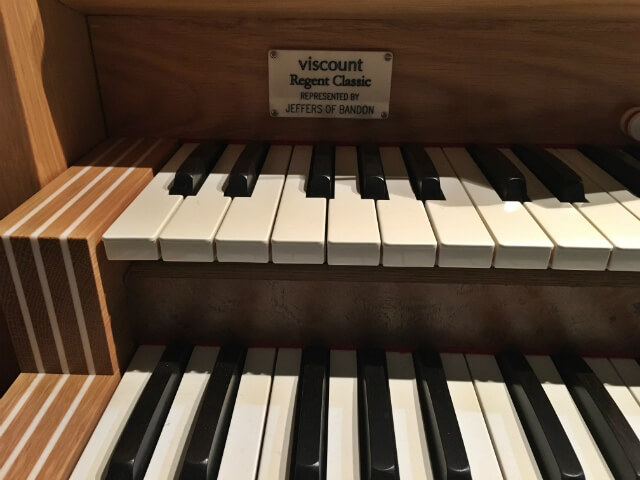
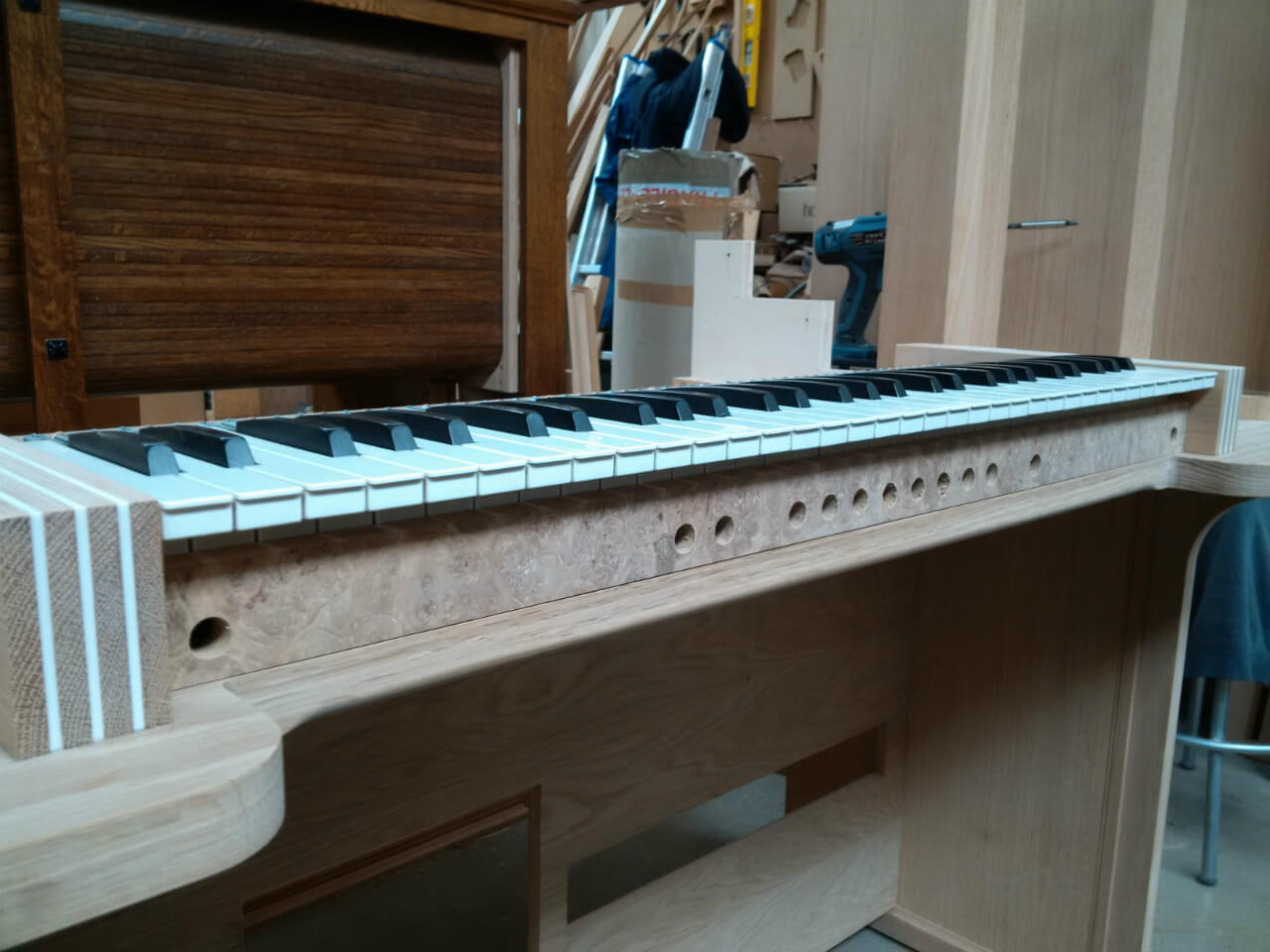
After a number of iterations, which included a design with plain black jambs, Trevor settled for a much lighter option. The jambs, music desk, and piston rails are in a burr oak veneer that provides a lovely warm colour contrast to the much lighter oak of the console main structure. Interestingly, for a relatively expensive instrument, Trevor chose wood-filled Fatar keyboards, preferring the feel of these to the more expensive, premium German UHT option we offer.
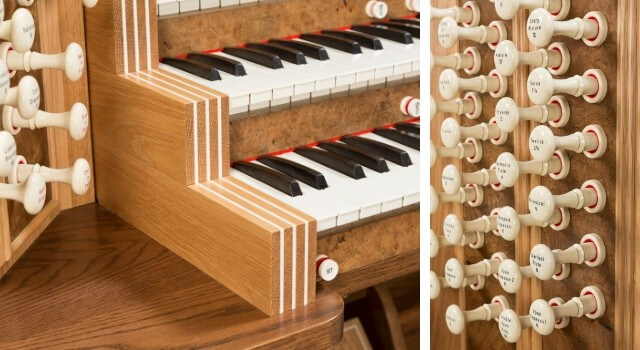
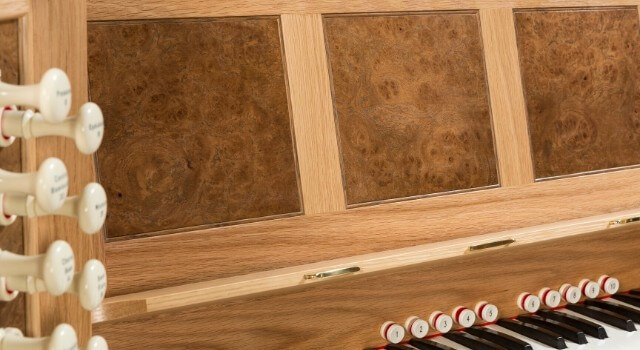
We enjoyed ourselves a little as well, adding stringing to the key cheeks and a first for us – stringing to the expression pedals as well! To listen to this organ being played in concert, by Dr Joseph Nolan, please CLICK HERE
Speaker installations and voicing
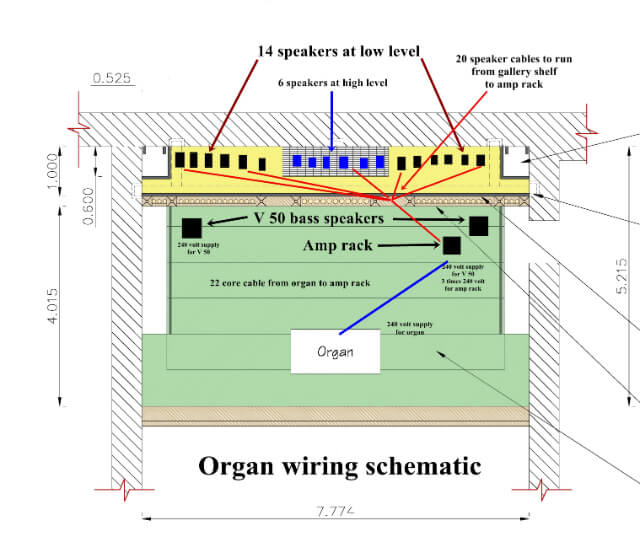
The plan was to deliver in July, but the major alterations to the gallery and removal of the pipe organ were running later than planned. This was one of the rare installations that allowed us to design the ideal speaker installation, as the gallery work included the construction both of the speaker enclosure, and also of a complete pipe façade using the display pipes from the old organ. This was constructed much higher on the West End wall than the pipe organ had ever reached. This had two advantages.
The sound source was much higher in the building. This meant the powerful stops would not seem as loud in the gallery as before, but still have power in the nave. Secondly, the sound source for all stops was much further away from the choir, so they would no longer be blasted by the organ in a way that was previously unavoidable. Originally, they stood right between the two pipe chambers, with the swell shutters opening right at head-height to their side. The revised gallery layout and speaker locations can be seen on this drawing.
The pipe organ was removed in late summer, and part of the agreement with St Joseph’s included the provision of a temporary instrument while the gallery reconstruction was carried out. The instrument was provided by Jeffers Music, an Envoy 350 Deluxe hire and demonstration model.
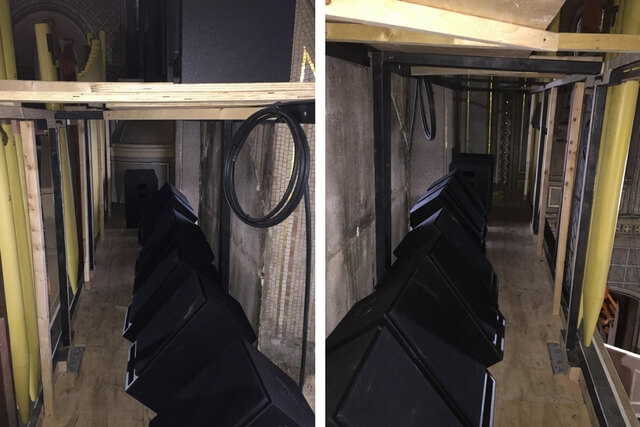
And so, finally, in December 2016 the church was ready for the new organ. With building work continuing on the roof right above the gallery, and the paint inside not yet dry, we arrived to find the church unusually cold. The heating had been turned off, so conditions for the job were a little challenging.
We were joined for this work by David Jeffers, our partner retailer from Bandon, Co. Cork. By about 8pm that evening we had all speakers installed, and the organ was speaking. The following day, Trevor and I carried out some basic voicing, as the noise from the roof work made it nearly impossible to listen in detail. A full voicing session was not possible until well into January, when we could be guaranteed a quiet church. This work was carried out by Jeremy.
Organist Trevor, however, is very technically competent; in his day job he captains flights for EasyJet! So Trevor was left with a full editor suite, allowing him to carry out all the voicing that is more usually left to us. I believe that Trevor’s wife did not see him much over the next few weeks. Rumour has it that he was spending a lot of time on the gallery with a warm coat, sandwiches, and a thermos flask. The sacrifices we make for the love of the organ and its music knows no bounds…!

I have had a passion for church organs since the tender age of 12. I own and run Regent Classic Organs with a close attention to the detail that musicians appreciate; and a clear understanding of the benefits of digital technology and keeping to the traditional and emotional elements of organ playing.

