
Almost 9 years ago now, we supplied one of our first custom built organs to Saint Bartholomew’s Church in London. The pipe organ had become so unreliable that something significant had to be done.
St Bartholomew’s the Great is a magnificent church, hidden away in the heart of ‘Old London’ close to Smithfield market. Unless you were actually going to visit, it is entirely likely that you would pass it by. Even standing right outside it, you get no sense of what a feast of splendour awaits you inside.
An upgraded organ for St Bartholomew the Great
Our first organ installed at St Bart’s was based on Viscount’s finest sample sound platform at the time. In 2018 we were asked if we could upgrade the instrument to the latest physically modelled sound system, and move speakers to more appropriate locations that were better protected. The speaker work was carried out in the summer of 2018 (speaker placement can be seen in the image below). We provided a loan instrument while we took away the drawstop console for the upgrade.
Inevitably the work took slightly longer than anticipated. While we were ready to return the instrument by late November, it was decided to defer the move until after the very busy Christmas Carol Concert season was over.
My visit in April was to resolve an irritating intermittent issue of loss of Swell volume. Needless to say, for the whole 2-plus hours I was there playing the instrument, the problem never occurred. So we must wait to see if the minor matters I looked at that may have contributed to the problem have done the trick.
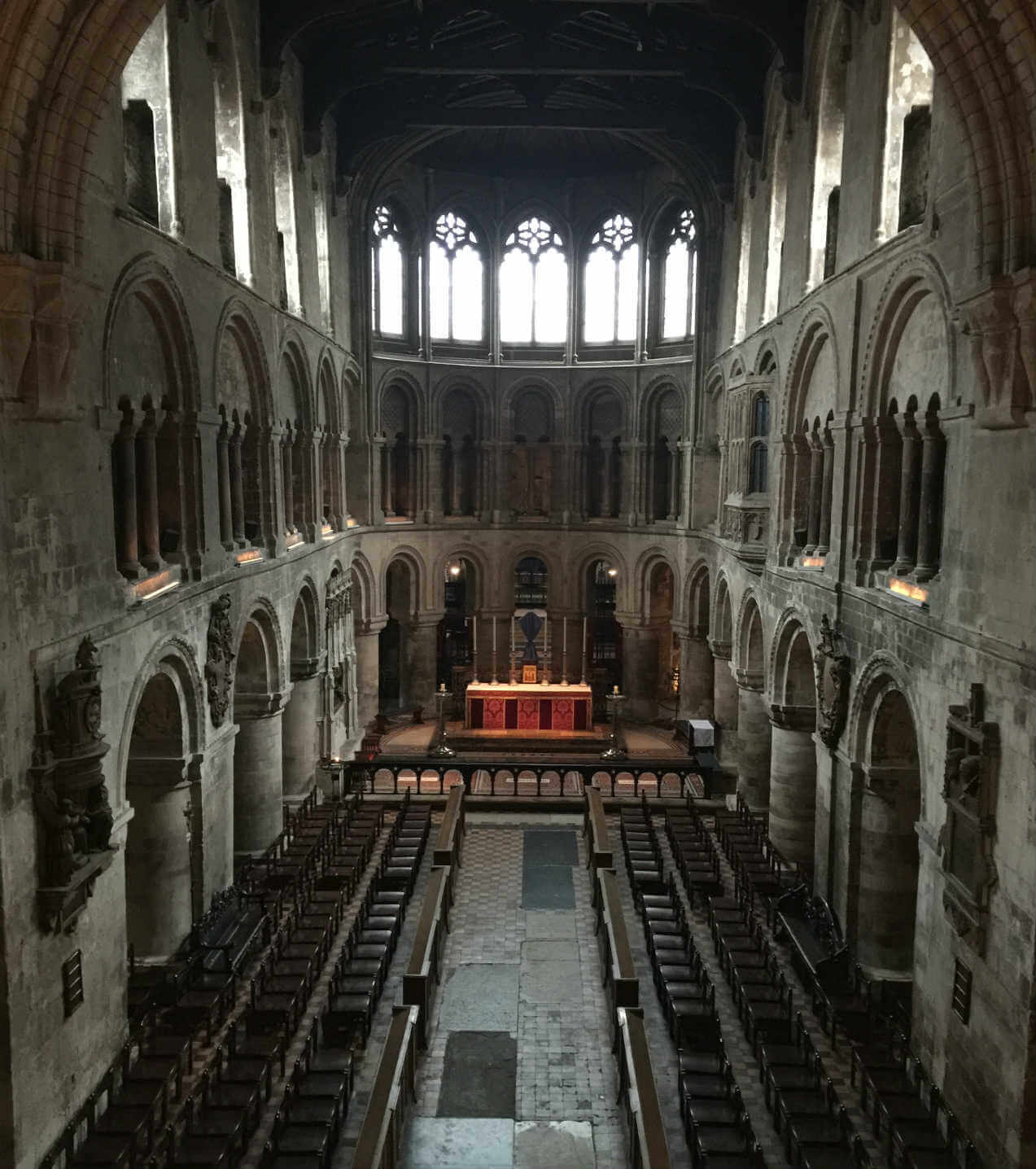
St Bartholomew’s Church – Amazing history and glorious building
My only previous visit to St Bartholomew’s was in 1974, when a friend was married there. So my recent visit was the first when I was really able to focus on the amazing history and detail in this glorious building. You may be familiar with the church on screen, as it featured in the film ‘Four Weddings and a Funeral’.
The church being of high Anglo-Catholic tradition, I was greeted by the lingering smell of incense as I walked into the darkened interior. Just beyond the entrance now stands a dazzling statue by Damien Hirst (2006), of Saint Bartholomew – which is on loan from his private collection.
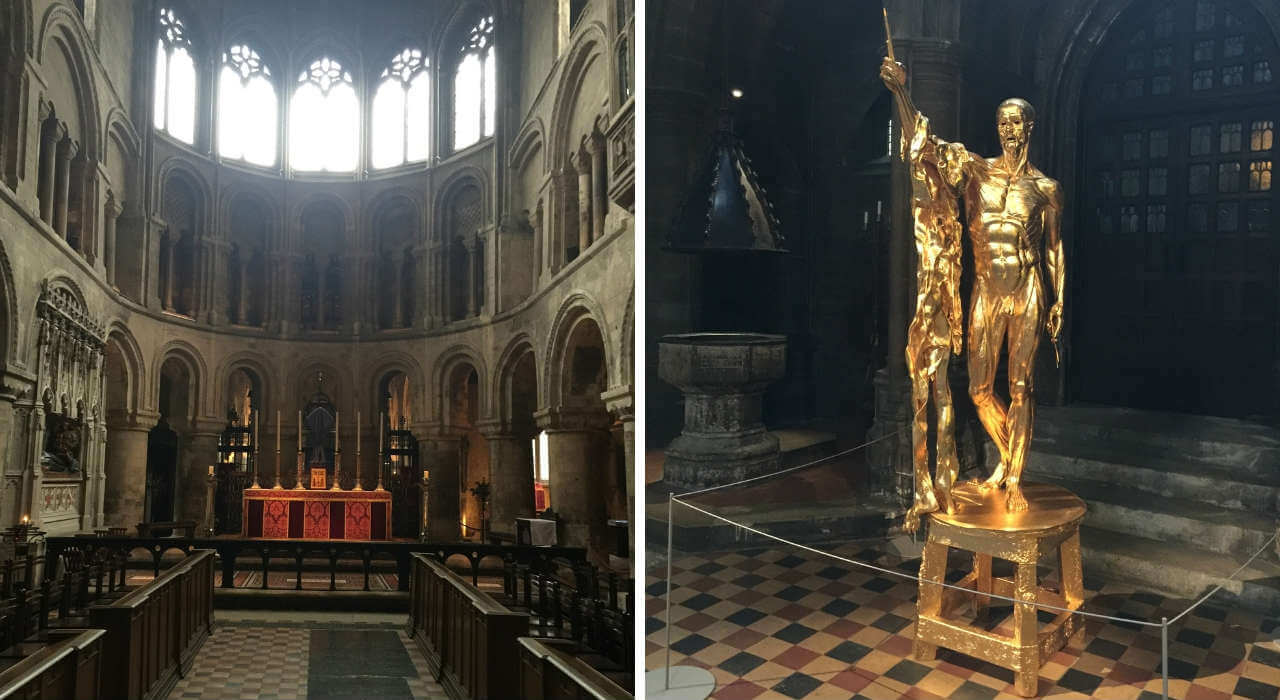
Thereafter, one enters a very calming and clearly medieval interior, that has remained largely unaltered at its core for 500 years. You get a clear sense of its beginnings as a Priory building of the Augustine order. One’s eye is drawn hither and thither to a feast of architectural details and delights.
Architectural details and delights
Personally, of course, it is the large west end organ case that gets immediate attention. It sits high above the pulpitum screen, which is adjacent to the choir stalls below. The screen itself is a magnificent structure, with a preacher’s desk mid-way between the ground and the organ case.
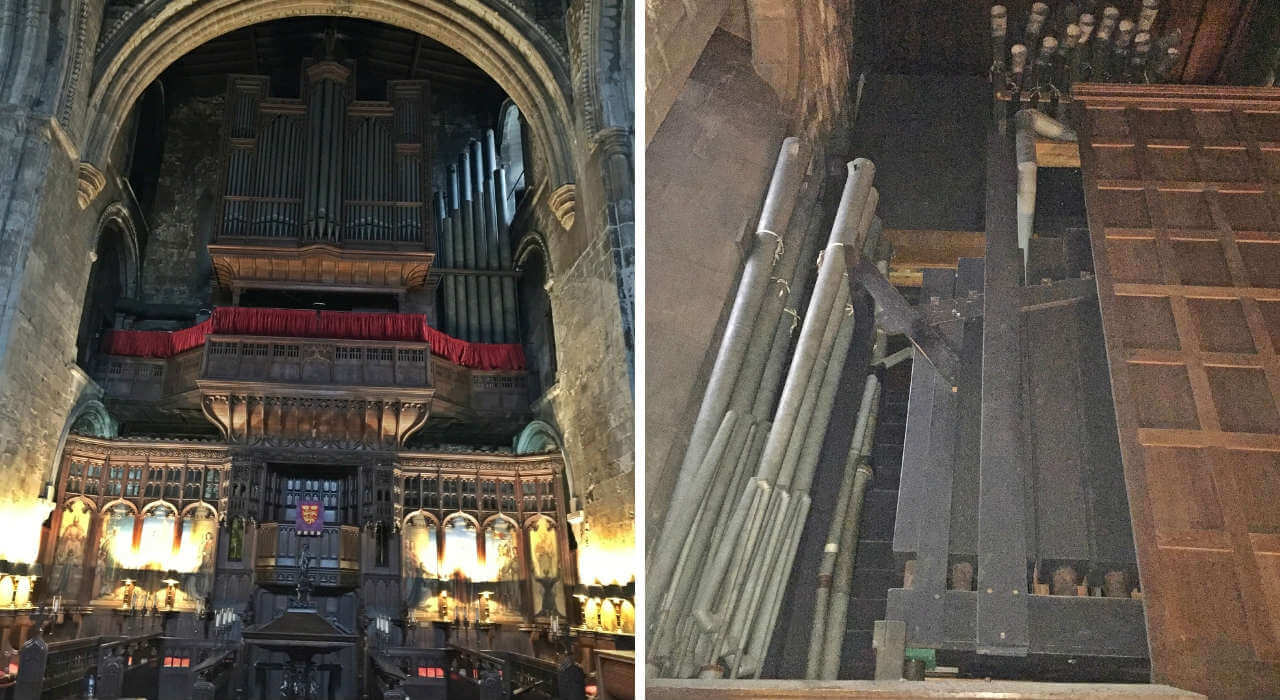
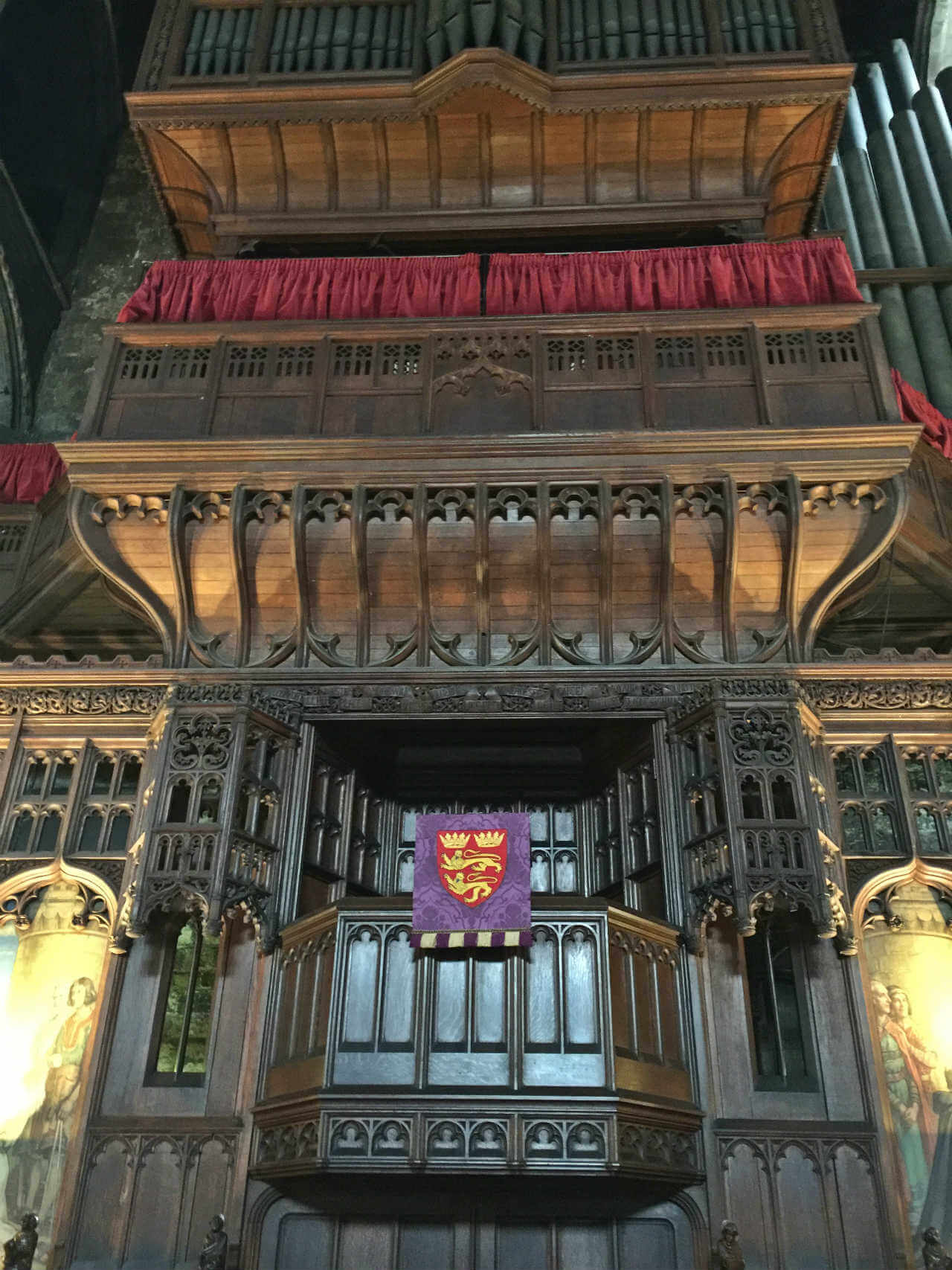
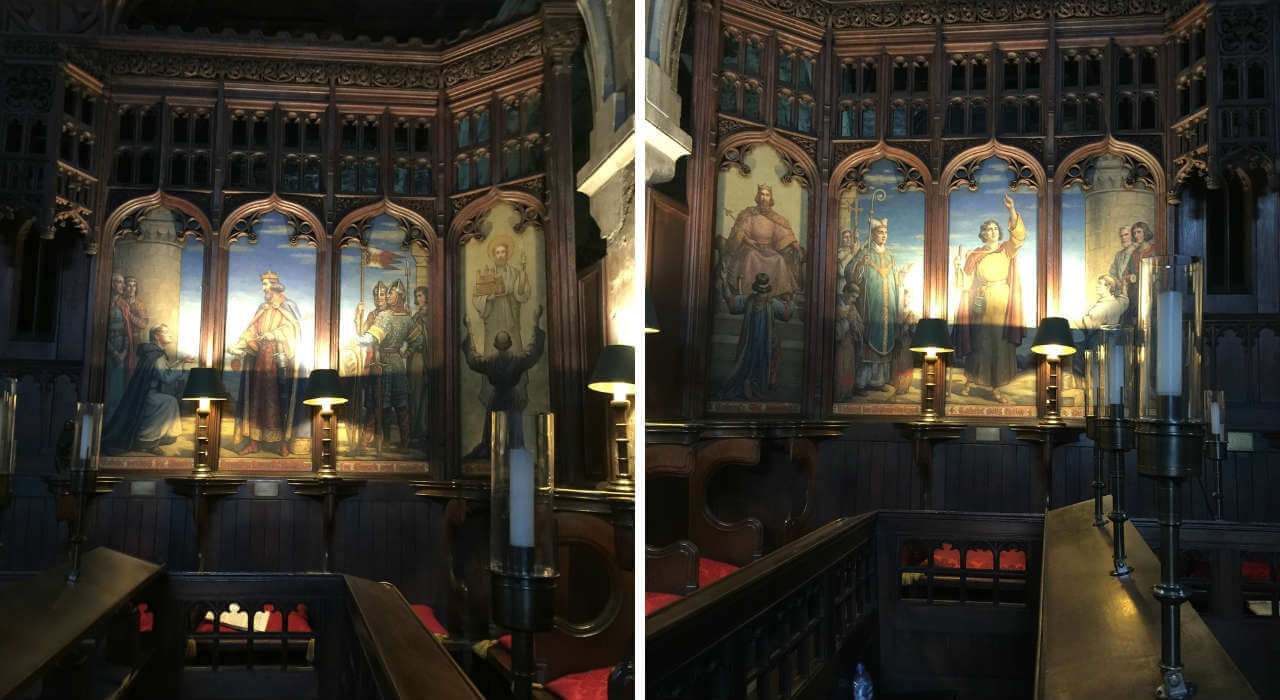
Below this to north and south are richly painted images of people in medieval dress. I am indebted to my ‘private researcher’, who advises that the figures include an image of Rahere (also known as Raher or Raherius). He was an Anglo-Norman priest and monk, who founded the Priory of the Hospital of St Bartholomew in 1123. The last quarter shows Rahere having a vision of St Bartholomew, shown with his flaying knife. Another shows Rahere blessed by Bishop Richard, starting to build both priory and hospital.
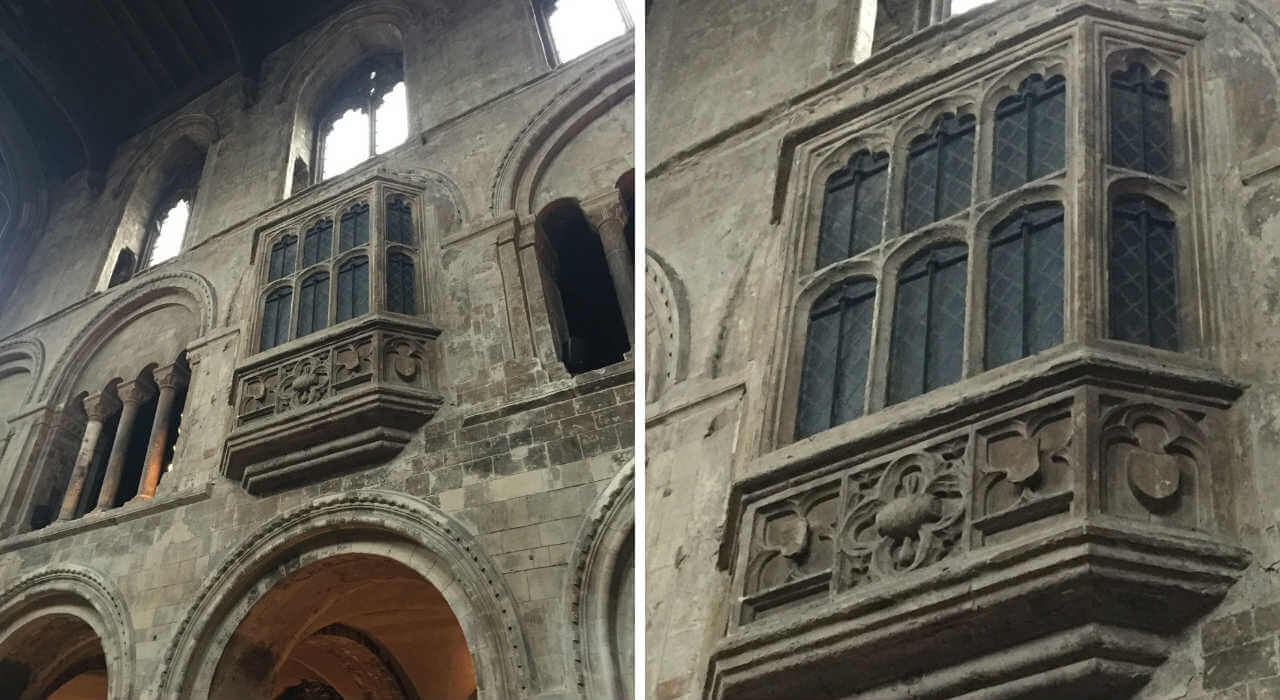
High on the south side nave wall is an oriel window, installed inside St Bartholomew the Great in the early 16th century by Prior William Bolton – allegedly so that he could keep an eye on the monks. The symbol in the centre panel is a crossbow “bolt” passing through a “tun” (or barrel); a rebus (pun) on the name of the prior. It seems there is nothing new in the concept of ‘spy in the sky’!
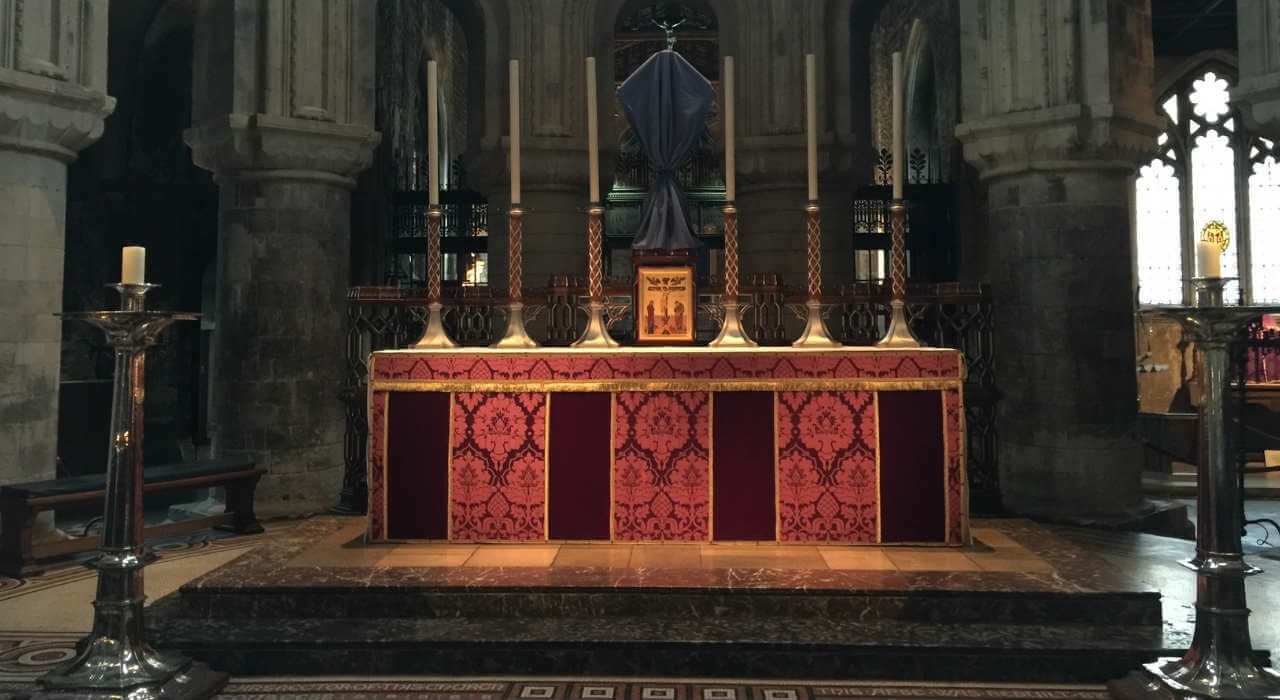
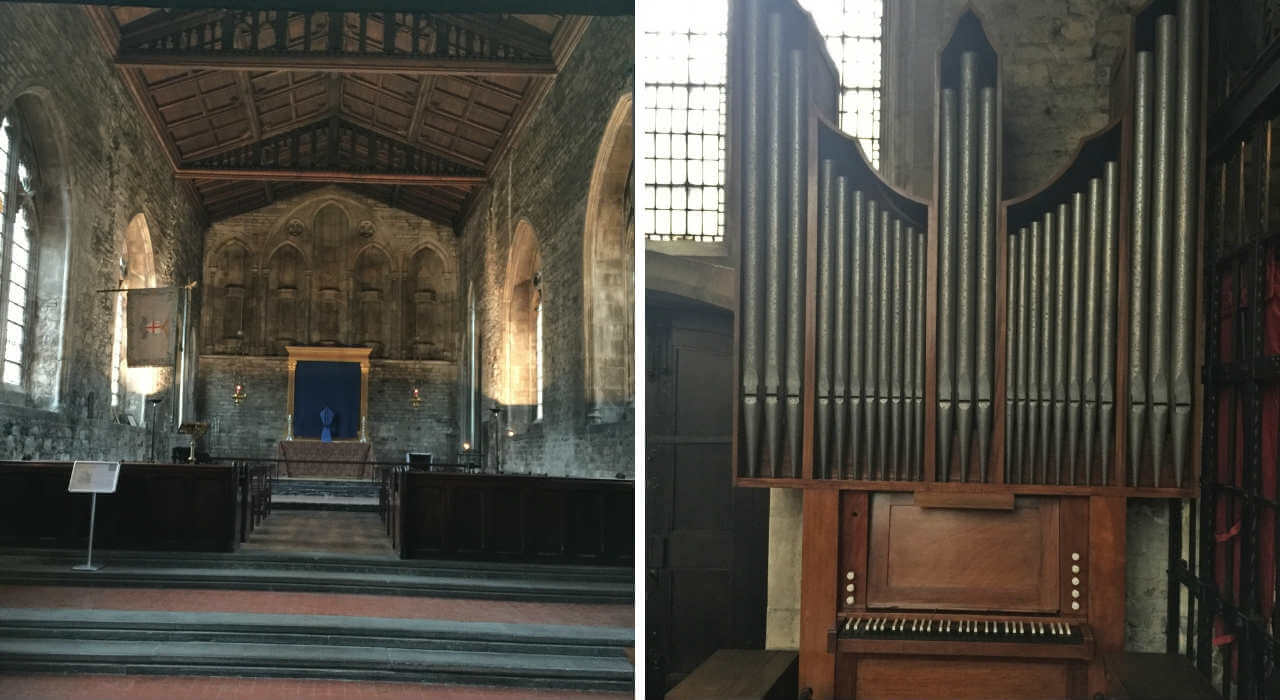
Behind the high altar, the medieval Lady Chapel was rebuilt in the late 1800’s. But you would be forgiven for thinking it is a much earlier structure. Sitting to the south side there is a rather sweet chamber organ, that allows a rather more temperate musical accompaniment than either our instrument or its pipe predecessor could have provided.
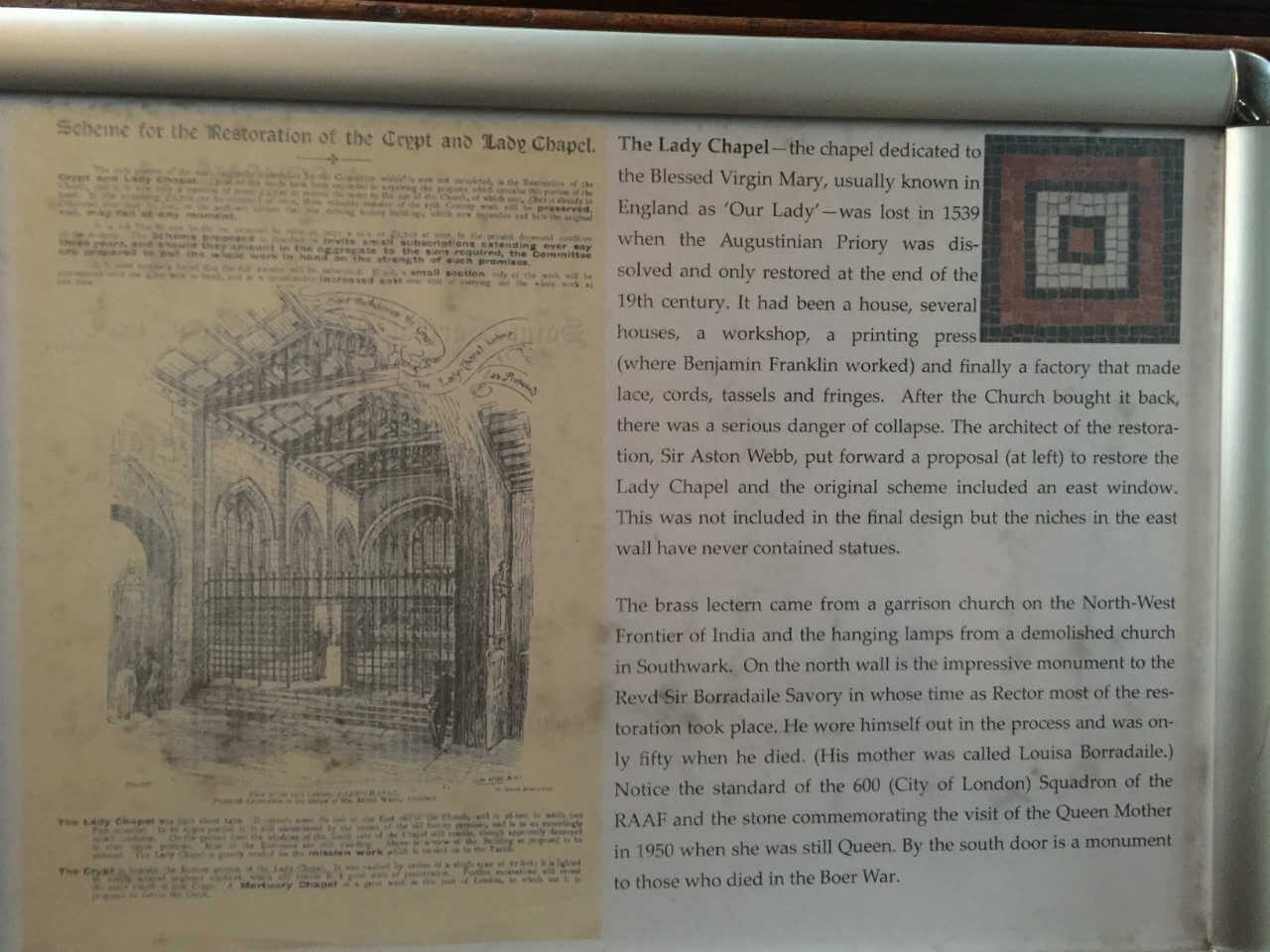
The Organs of St Bartholomew the Great
As part of this visit, I was given access to the organ loft. Redundant lofts have a sense of ghostly sadness to them and St Bart’s is no exception. The organ bench has long gone, and the dust covered pedalboard now provides a shelf for book storage. The pipe organ is Hill and must have once made a great sound, sitting as it does in the best of all locations for a church pipe organ – high on the West End wall.
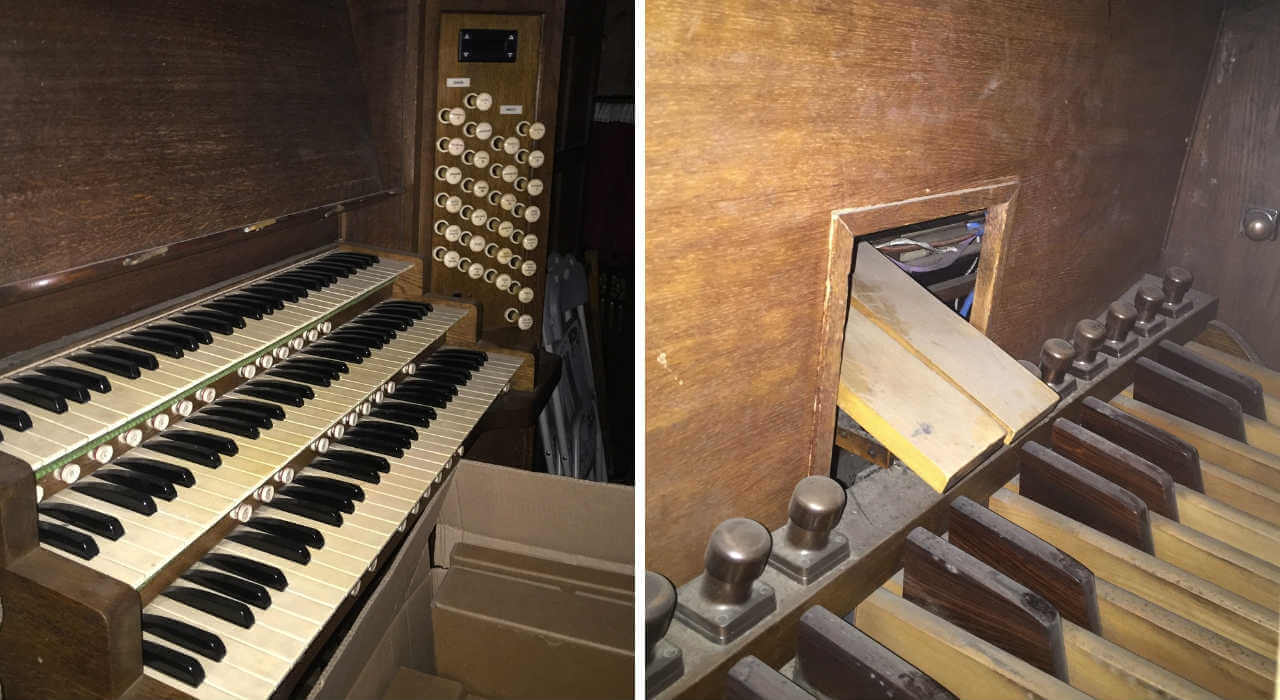
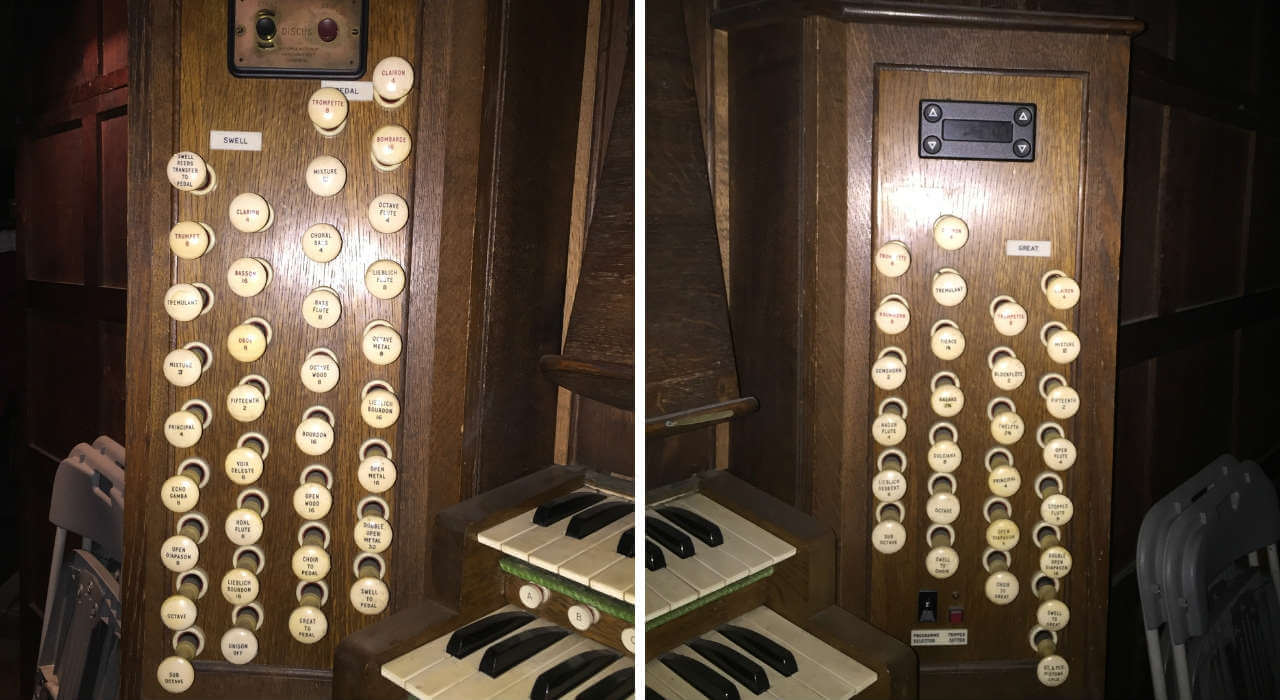
You can read about the history of all the organs at St Barts on their website, including plans for a new Schoenstein pipe organ in the years ahead.
Great Saint Bart’s, as it is often affectionately known, is a very atmospheric building, and from the moment you walk in, you immediately sense the history of the site. While much of the medieval Priory buildings are long since gone, the site managed to escape the Great Fire of London, which raged about this location.
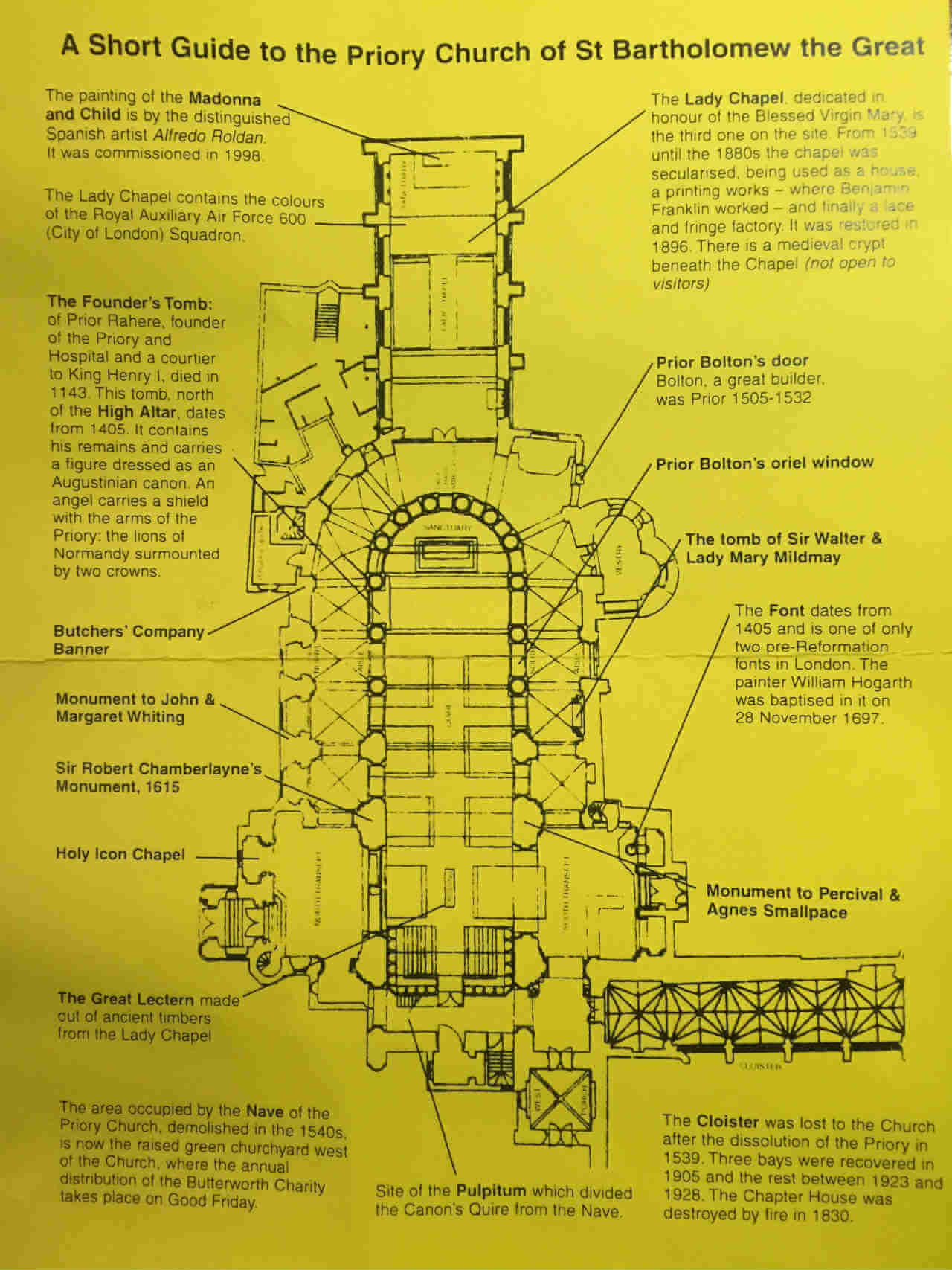
It is truly a ‘must visit’ on any tourist itinerary. A place where you can escape the hustle and bustle of the capital outside, and take refuge in the tranquility of the beautiful place of worship.
Finally, do stop and listen to the extraordinary sound of our upgraded Regent Classic organ. ‘Standing in’ for the time being, until a great pipe organ once again fills the church.
View the stop list and specification of our organ at St Bartholomew the Great.

I have had a passion for church organs since the tender age of 12. I own and run Regent Classic Organs with a close attention to the detail that musicians appreciate; and a clear understanding of the benefits of digital technology and keeping to the traditional and emotional elements of organ playing.

