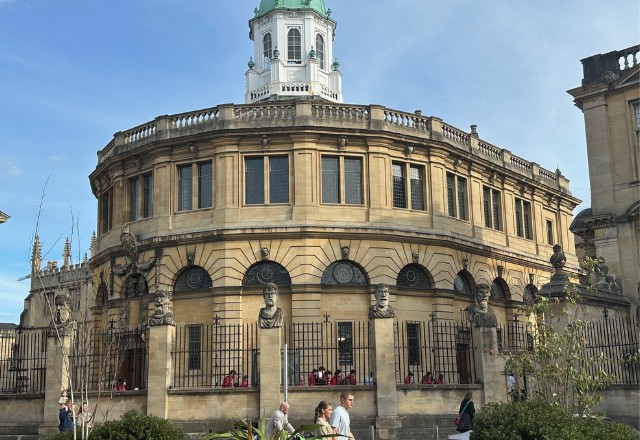
One of Christopher Wren’s architectural masterpieces, built in 1664-69, is the Sheldonian Theatre in Oxford. A Grade I listed building, it has been the home of Oxford University ceremonial gatherings for almost 400 years. The building was paid for by Gilbert Sheldon, Archbishop of Canterbury, and former Warden of All Souls.
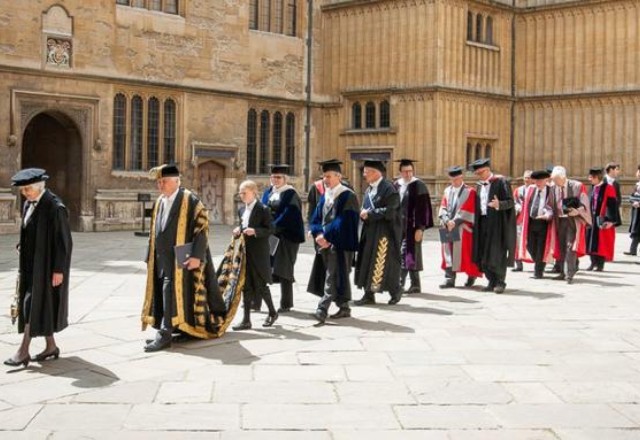
Every year, a great many processions of graduates enter the building to receive formal grant of their degrees earned at the University. Once a year there is a special ceremony called Encaenia, for the presentation of honorary degrees to people distinguished in the world of science, politics, and the arts.
Organs at the Sheldonian Theatre
Very early in the building’s history, an organ would play as the processions entered and left the building. Up until 1999 these were pipe organs.
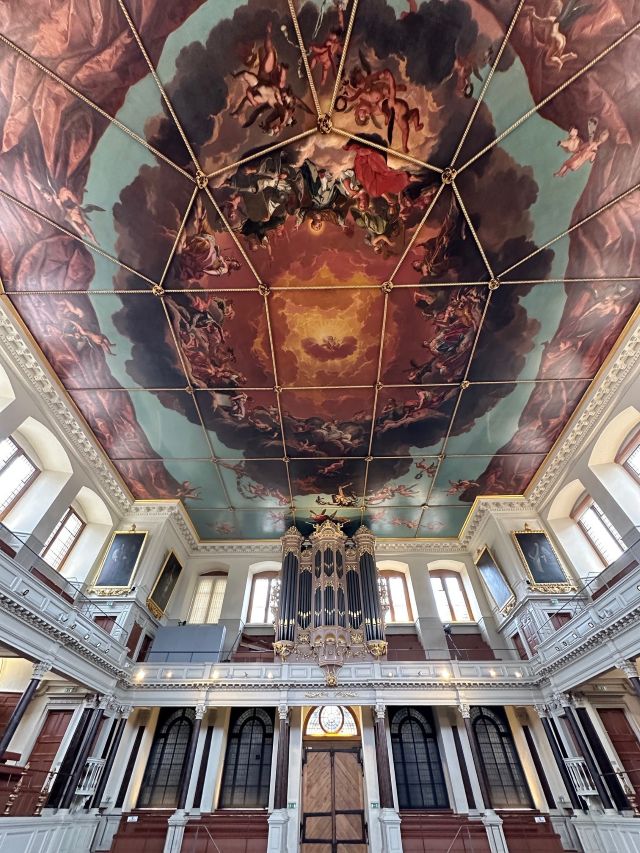
The first substantial instrument was built by John Harris in 1726, and was revised over time. In 1877, a new 3 manual 29 stop Willis instrument was built in the pipe case that we see in the building today. In 1877, there were pedal towers at each side, since removed to restore the windows that they covered. This instrument was enlarged in 1927 and 1947, and finally rebuilt by Harrison & Harrison in 1963.
A unique digital organ by Bradford University graduates
By the mid-90’s the instrument was again needing a rebuild, but for reasons that are not altogether clear, the decision was taken by Simon Preston to substitute a novel digital instrument that was the gift of a past undergraduate. It was a cutting-edge project in 1999, using technology developed by Bradford University graduates – an electrical component platform that created the wave forms and allowed significant post-installation voicing.
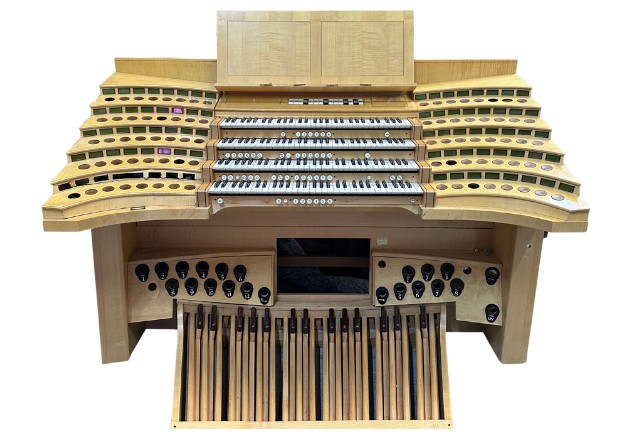
There were 28 audio channels and over 120 speaker cabinets hidden inside the pipe case. The instrument could play 4 different styles of instrument, with stop names displayed on a dot matrix display above each stop button.
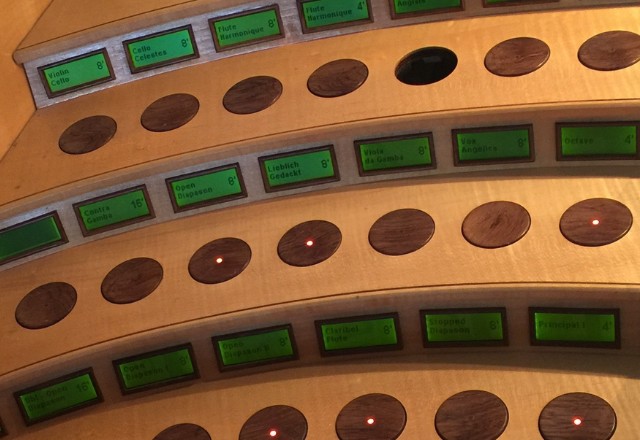
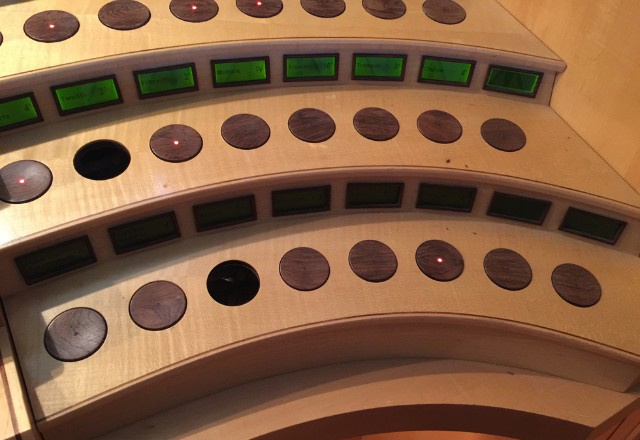
The console was also of exceptionally bold design, built into the loft high on the south east corner of the theatre seating. A beautifully crafted satin wood-veneer terraced console houses 88 stop discs that had indicator lights to show if they were on or off. Below the adjustable music desk are a row of rocker tabs that controlled the couplers. To the right side, in a concealed rebated panel, is the switching where the musician could select the style of instrument to be played.
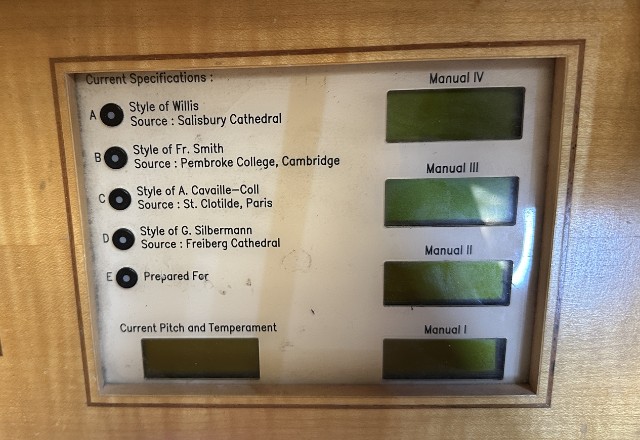
The only drawback of this plan, as I would find out many years later playing the instrument myself, was that the setting sun shone so strongly on the stop name displays that they became unreadable, adding quite some excitement to what might happen when changing registration.
This console has now been removed and replaced with a standard 3 manual instrument. We hope this is a stop gap until funds have been raised to install a new pipe instrument some time in the future.

I have had a passion for church organs since the tender age of 12. I own and run Regent Classic Organs with a close attention to the detail that musicians appreciate; and a clear understanding of the benefits of digital technology and keeping to the traditional and emotional elements of organ playing.

